Muse Cells
A stress-enduring subpopulation identified by the SSEA-3 marker, supplied in a standardized per-dose presentation.
 COA per lot
A defined subpopulation.
Muse (Multilineage-differentiating Stress-Enduring) cells are a stress-tolerant subpopulation found within mesenchymal tissues, identified by SSEA-3 expression.
1CELL supplies SSEA-3+ Muse cells in a standardized per-dose presentation for consistent, repeatable application, with a lot-specific Certificate of Analysis.
At a glance.
- Product type
- Muse cells (SSEA-3+ subpopulation)
- Marker
- SSEA-3+
- Characterization
- SSEA-3 expression and differentiation assay
- Presentation
- Standardized per dose
- Access
- Licensed healthcare professionals
- Documentation
- Lot-specific Certificate of Analysis
Identified by SSEA-3.
Each lot is characterized by SSEA-3 expression and a differentiation assay.
Released against specification.
- SSEA-3 expressionReported on the lot's COA
- Differentiation assayPer lot
- Viability, sterility and endotoxinTested against defined limits
What travels with each lot.
Verified professionals can review documentation before ordering and receive it with every delivery.
- Certificate of Analysis (lot-specific)
- SSEA-3 expression report
- Differentiation assay
- Clinical protocol
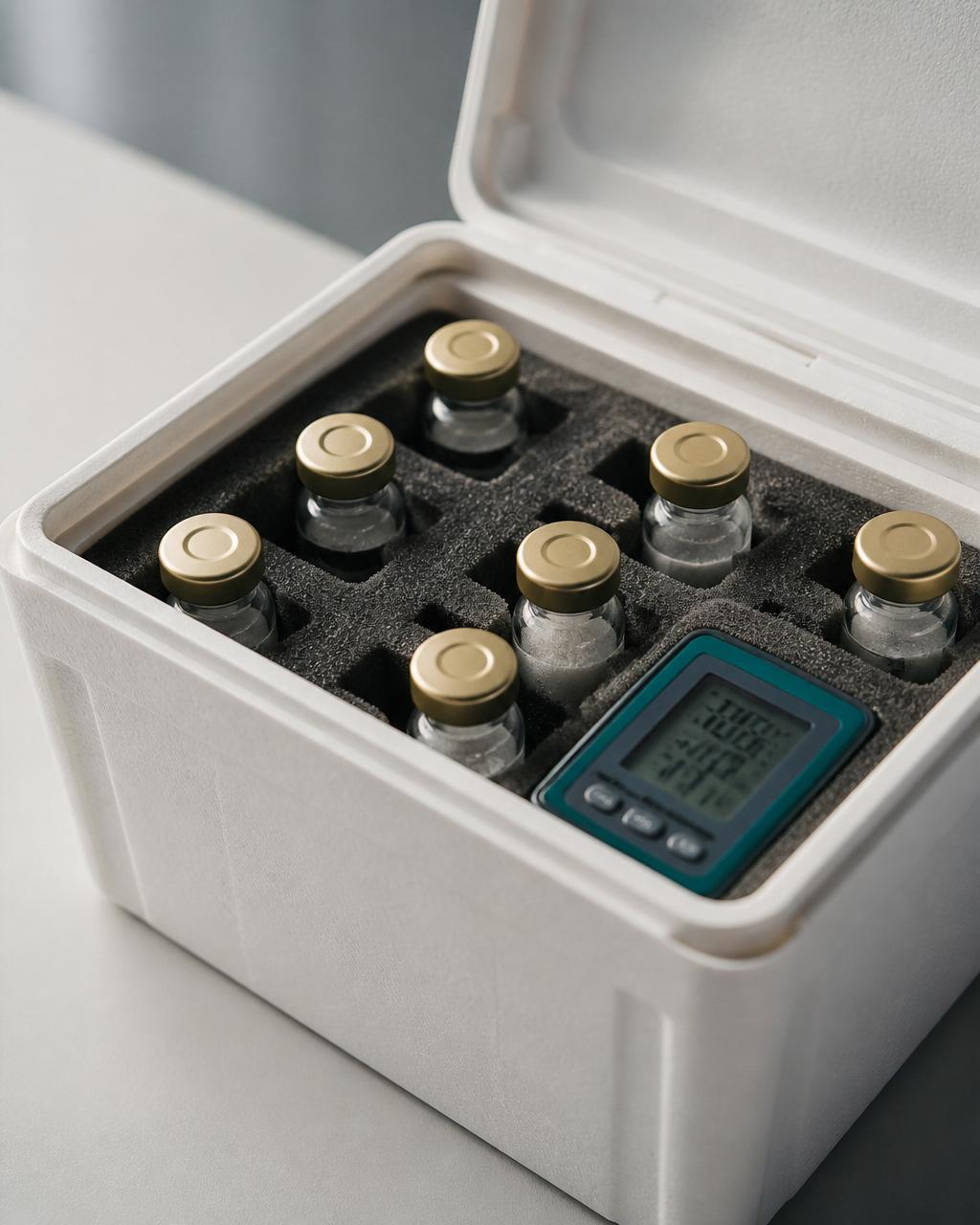
- Shipment temperature and custody record
Preserved as the product requires.
Depending on formulation, Muse cells can require cryopreserved storage and cryogenic transport, or controlled cold-chain conditions. 1CELL confirms the conditions with the source laboratory for each lot and coordinates packaging, transport and clinic handoff.
What the research says.
Muse cells were first described in 2010. Preclinical research describes multilineage differentiation and migration toward damaged tissue. Early clinical studies have been reported, mostly in Japan.
Evidence in humans is still limited; Muse cell therapies should be considered investigational.
Work with documented Muse cells.
Request professional access to review specifications, documentation and availability for your clinic.
Muse cell questions.
How do they differ from MSCs?
Muse cells are a specific SSEA-3+ subpopulation found within mesenchymal tissues. They are characterized and supplied separately from MSCs.
Who can order them?
Licensed physicians and clinics, where permitted by local regulation. Request professional access and we will verify your credentials.
How are they shipped?
Under the conditions specified for the product — cryogenic or controlled cold chain — with temperature monitoring and a custody record.
Are Muse cell therapies approved?
Human evidence is still limited and they should be considered investigational. Use is the treating physician's decision within applicable regulation.